 Buy now, pay later — powered by PayPal
Garden
Does copper tape really work for slugs?
Yes — copper tape deters slugs and snails when it's fitted as a complete, unbroken ring on a clean surface, and used as part of your slug defence rather than a magic bullet. It is a deterrent, not a poison. The honest truth is that most "it didn't work" stories come down to how the tape was fitted, not the copper itself. This guide from Little Copper Garden explains how copper works, what the much-quoted RHS trial actually found, and how to give a copper barrier the best possible chance.
In short: copper tape works as a clean, continuous ring on pots and raised beds, and best alongside hand-picking and tidy habitat — gaps, leaf bridges and dirt are why people say it "doesn't work".
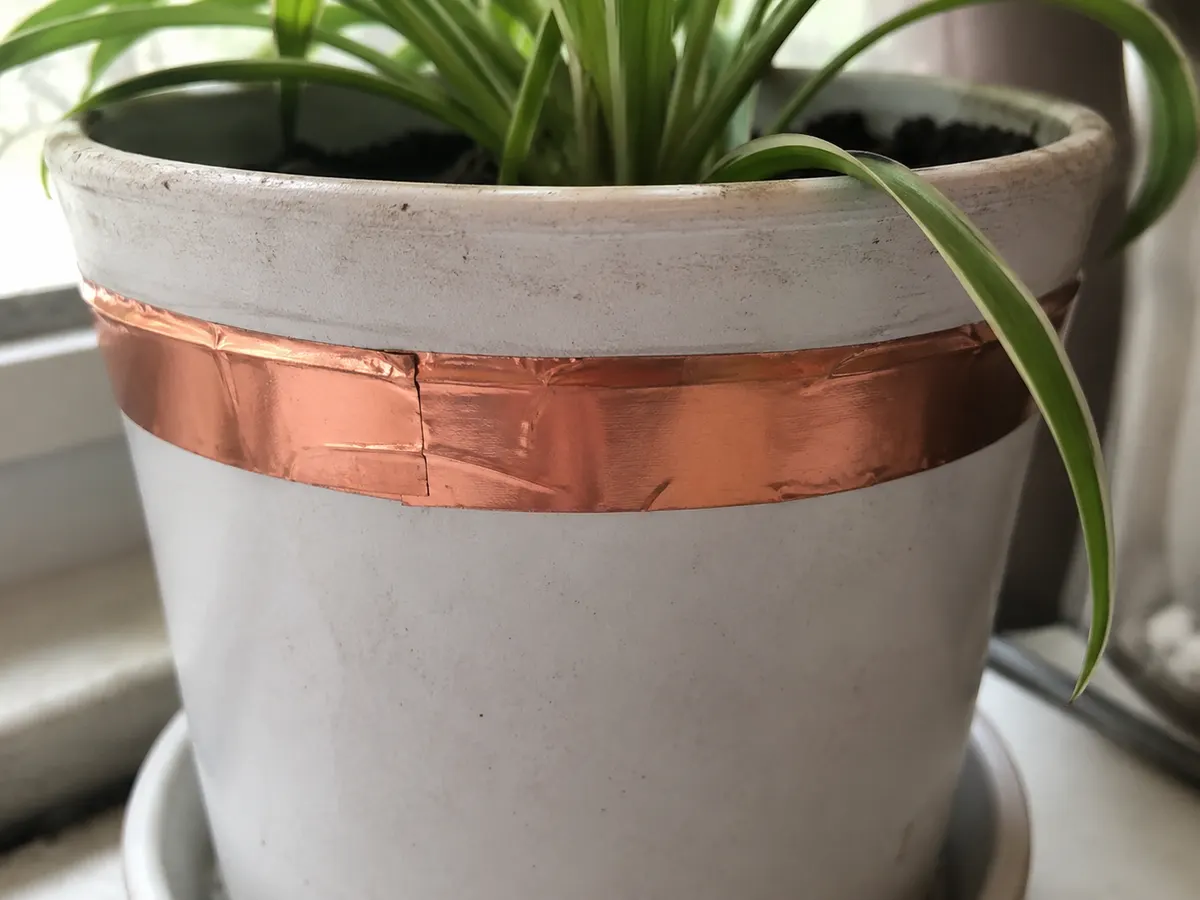
How does copper tape stop slugs and snails?
Copper tape deters slugs and snails on contact: as the animal's moist underside slides onto the bright metal it meets a faint, harmless reaction it dislikes and turns back. Nothing is killed — the only thing between the slug and your plant is the unbroken band of copper. That's why a single gap, or a leaf flopping over the band, undoes the whole barrier.
What did the RHS copper tape trial actually find?
A Royal Horticultural Society (RHS) study, run over several years with home gardeners, tested seven popular slug-control methods on lettuce and concluded that none of them — copper tape included — reliably reduced damage in that open-ground setting. The RHS summarised the finding plainly:
"None of the treatments tested provided any benefit to the plants compared to control plots which were not treated with any method of slug control."
It's worth taking seriously — but it's also worth understanding what was tested: lettuce in open beds, not an unbroken ring on a clean pot rim or raised-bed edge, which is where copper performs best and how most gardeners actually use it. The fair conclusion isn't "copper never works" — it's that copper is a useful barrier in the right place, with realistic expectations, not a cure-all that replaces every other control.
In short: the RHS trial tested open beds, not clean pot rims — treat copper as a reliable barrier for containers and bed edges, not a guarantee for open ground.
What happened when we fitted it in our own garden
We don't just sell copper tape — we use it. Across the 2025 growing season we ringed the rims of our own pots, troughs and a timber raised bed with the 24 mm and 50 mm tape and checked them through the wet spells when slug pressure was highest. The pattern was consistent: where the band was a single, overlapping, gap-free ring on a clean rim, the plants inside stayed almost untouched; the only nibbled plants we found were ones where a leaf had flopped over the tape onto the soil and bridged it.
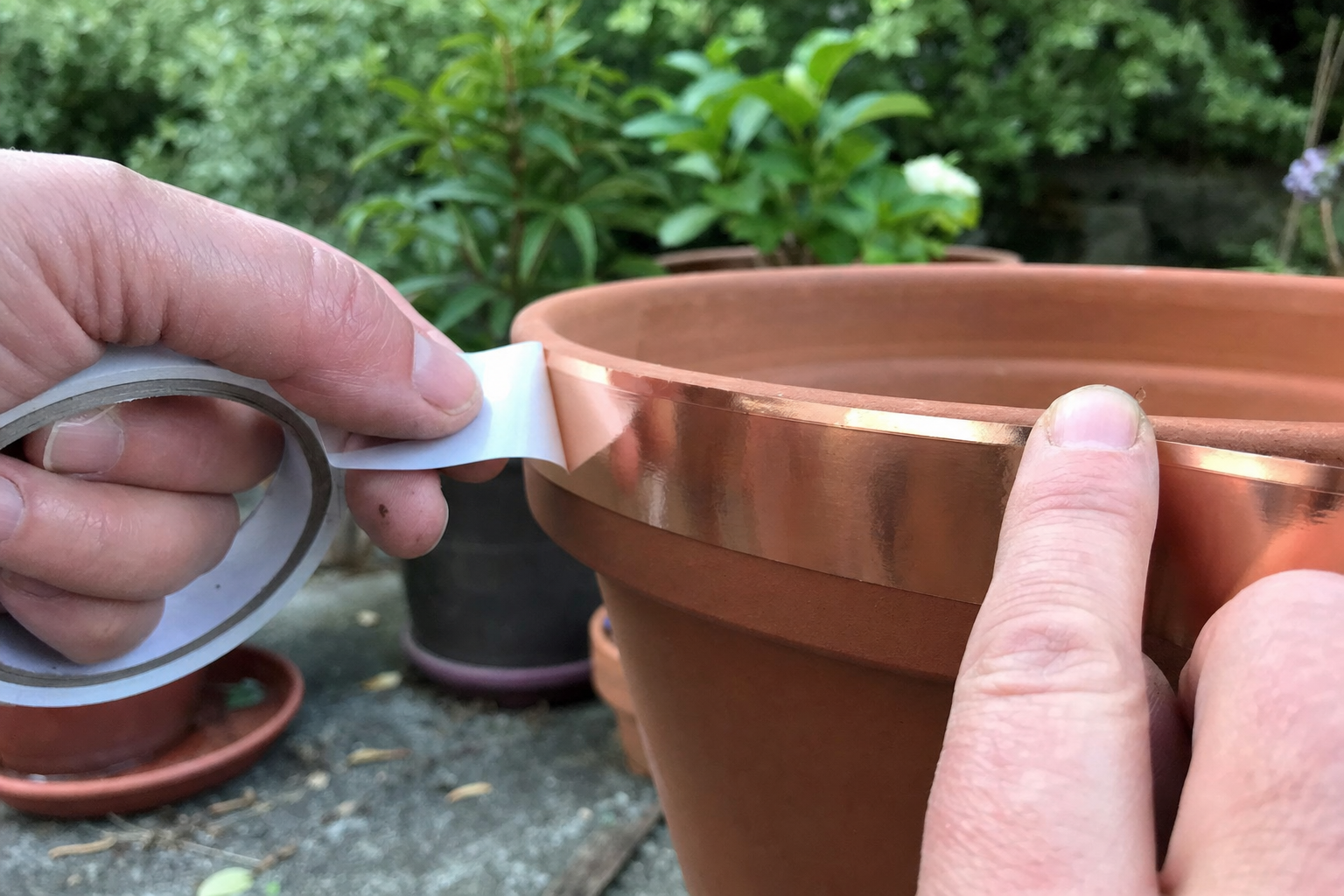
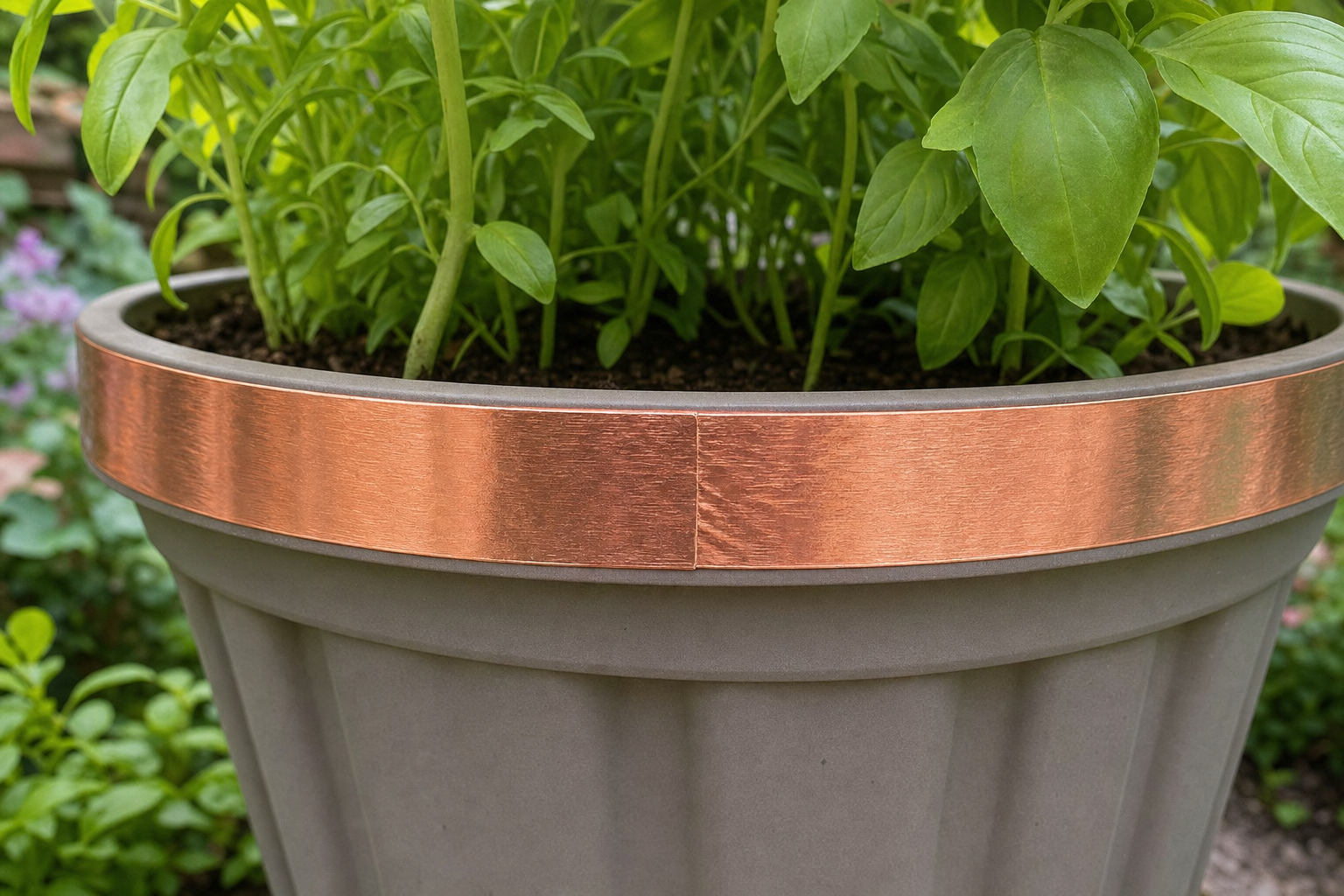
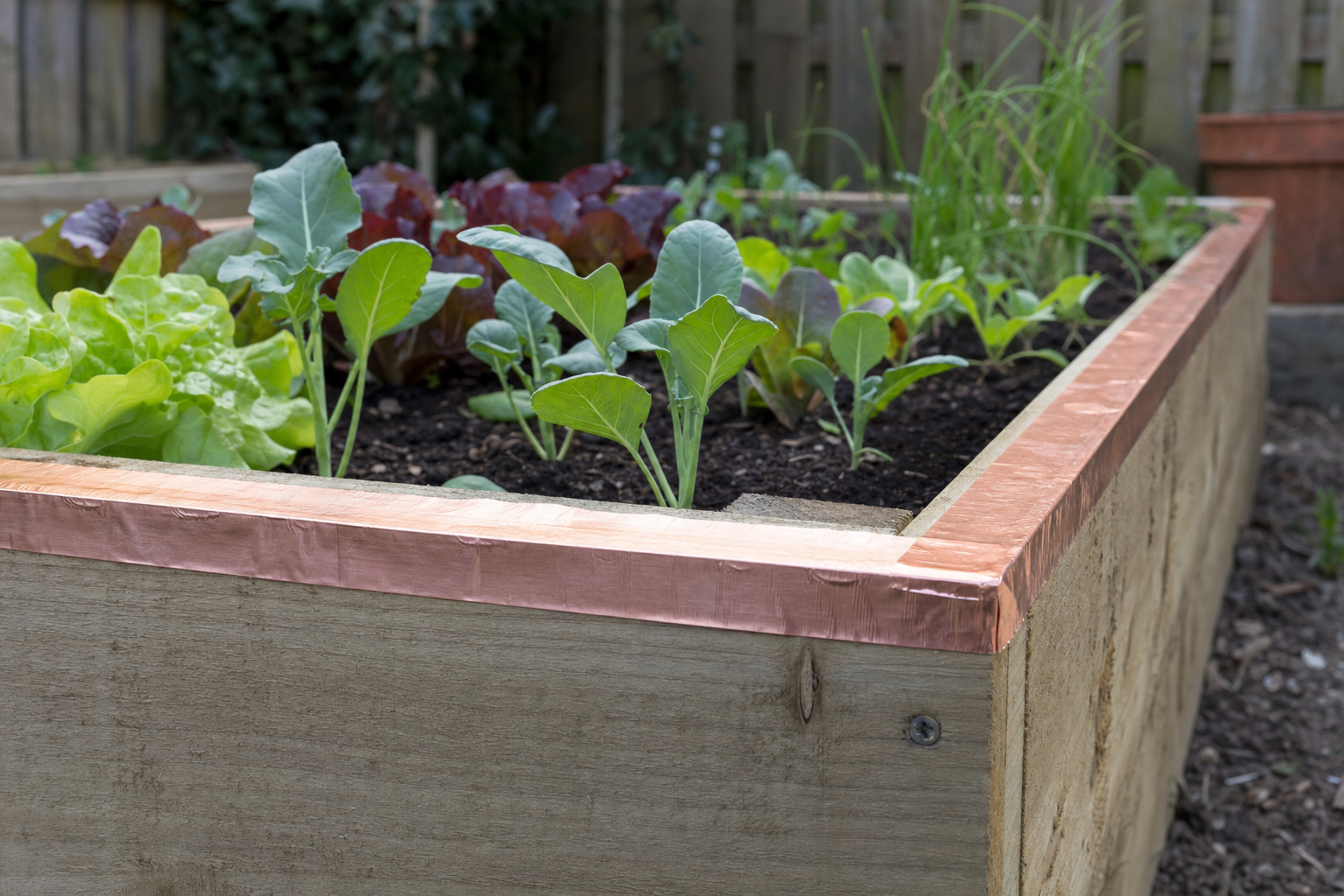
In short: in our own season-long use, an unbroken band on a clean rim worked; every failure we saw came from a gap or a leaf bridge, not the copper.
Why do people say copper tape doesn't work?
Nearly always for one of these reasons — and all of them are fixable:
- A gap in the band. If the ends don't overlap, or the tape lifts, that single break is an open door. The ring has to be genuinely continuous.
- A leaf or cane bridge. A leaf flopping over the band, or a plant label or stem touching both sides, lets slugs simply walk across.
- Pests already inside. Copper keeps slugs out — but if slugs or eggs are already in the pot, the barrier traps them in with your plant.
- Narrow or filthy tape. A thin, soil-caked or heavily tarnished band is easier to bridge. Wider tape, kept reasonably clean, deters more reliably.
How do you make copper tape actually work?
Use a wide tape (24 mm or 50 mm) so the band is hard to bridge, fit it as a complete overlapping ring on a clean, dry rim, and keep leaves and canes from bridging it. Start with slug-free compost, wipe the copper now and then to keep it bright, and in a wet, slug-heavy year run a second band above the first. Our slug barrier guide has the full step-by-step method, and the width guide helps you pick a size.
In short: wide tape, a continuous ring, a clean rim and no leaf bridges — that's the difference between "it works" and "it didn't".
Is copper tape enough on its own?
Treat copper as one layer of your defence, not the whole wall. It's brilliant for ringing pots, troughs and raised-bed edges, but the most reliable results come when it's paired with a little hand-picking on damp evenings, tidy habitat that gives slugs fewer hiding places, and nematodes where pressure is high. See our honest comparison of copper tape vs slug pellets, nematodes and wool for how the methods stack up now that metaldehyde pellets are banned.
Which width works best for slugs?
For slug barriers, wider is better — a broad band is harder to stretch across. The 24 mm and 50 mm rolls are the most reliable for pots, planters and raised beds, while narrower tape suits small containers or doubling up. Every width is the same genuine conductive copper foil; only the coverage changes.
- Copper Tape - 5mm x 25m — £4.09
- Copper Tape - 10mm x 25m — £5.19
- Copper Tape - 20mm x 25m — £6.09
- Copper Tape - 24mm x 12m — £6.09
- Copper Tape - 50mm x 15m — £10.49
In short: choose 24–50 mm for the most reliable slug barrier — see the width guide for the full breakdown.
Frequently asked questions
- Does copper tape really work for slugs?
- Yes — copper tape deters slugs and snails when it is fitted as a complete, unbroken ring on a clean surface, and used as part of an integrated slug defence. It is a deterrent, not a poison. Most reports of it 'not working' trace back to a gap in the band, a leaf bridging it, or slugs already inside the pot — not to the copper itself.
- What did the RHS trial say about copper tape?
- An RHS trial at Wisley found copper tape made no significant difference to slug damage in its test — but that test used open ground and lettuce in beds, not the unbroken ring on a clean pot rim or raised-bed edge where copper performs best. It's a fair reason to set realistic expectations: copper is a useful barrier in the right place, not a cure-all, and works best alongside other controls.
- Why do some gardeners say copper tape doesn't work?
- Almost always for a fixable reason: a gap where the ends don't overlap, a leaf or cane bridging the band onto the soil, dirty or badly tarnished copper, or slugs and eggs already in the pot when the ring went on. Fix those and the same tape usually starts working.
- Does copper tape stop working when it tarnishes?
- A bright copper surface gives the strongest reaction and the tape does dull outdoors over time. It keeps deterring slugs as it tarnishes, just a little less strongly — a quick wipe with a cloth or a little vinegar restores the shine and the effect.
- Is copper tape worth it for slugs?
- For pots, troughs and raised beds it usually is: it's inexpensive, chemical-free, safe around pets and food crops, and lasts a season. It is less suited to protecting open ground or sprawling beds, where nematodes or hand-picking do more of the work.