 Buy now, pay later — powered by PayPal
Copper tape guide
How to use copper tape: slug barriers, stained glass and shielding
Copper tape is a self-adhesive strip of conductive copper foil with dozens of practical uses — from keeping slugs off your plants to lining a guitar cavity. This guide from Little Copper Garden explains how it works, how to apply it as a slug and snail barrier, and where else a roll earns its place.
Does copper tape stop slugs and snails?
Yes — copper tape deters slugs and snails when it forms a complete, gap-free ring. As a slug's moist underside slides onto the copper, it experiences a faint electric sensation it finds unpleasant and retreats, so the band acts as a barrier rather than a poison. Because it is purely a deterrent, the ring must be unbroken and kept clear of leaves, canes or soil that could let a slug bridge across it.
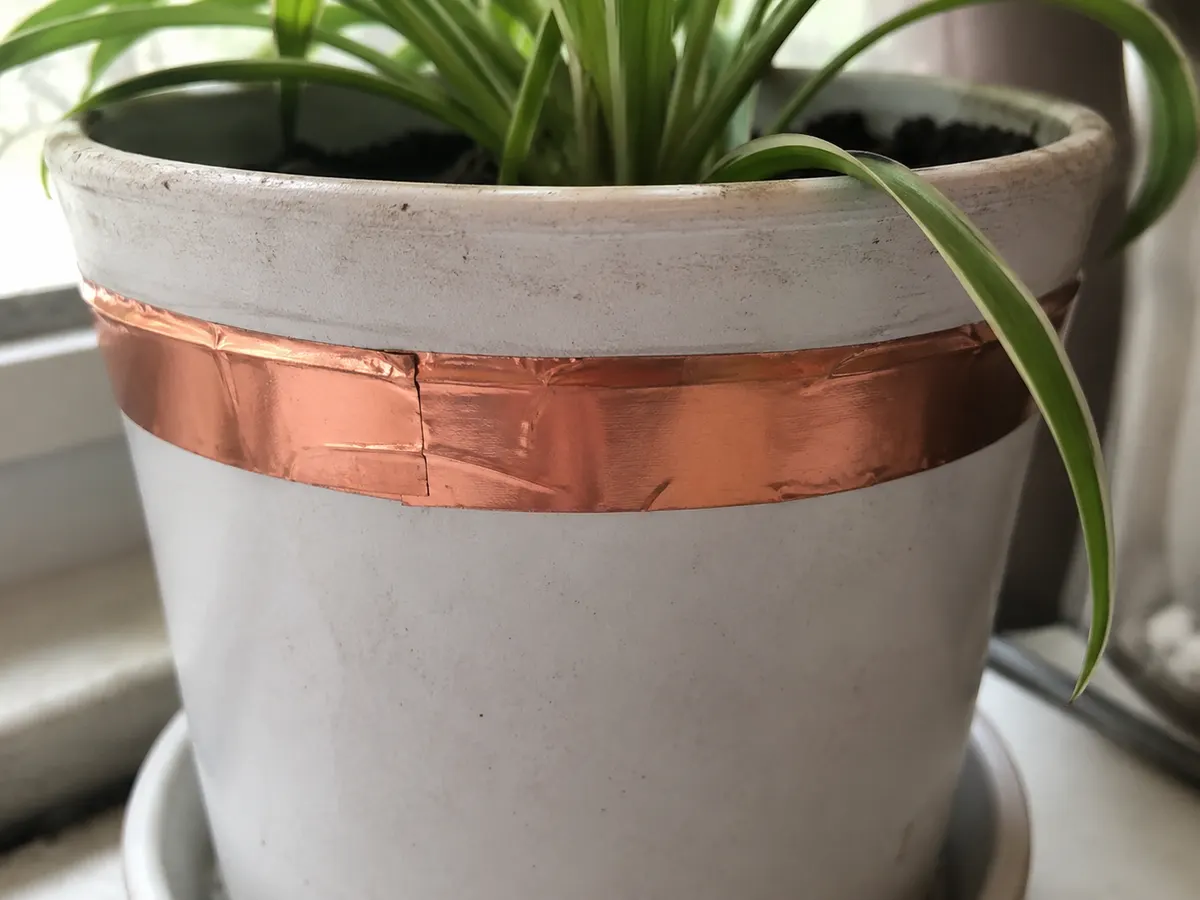
In short: copper tape stops slugs and snails when applied as a clean, continuous ring with no gaps or leaf bridges.
How do you apply copper tape as a slug barrier?
Apply copper tape in five quick steps: clean the surface, measure the circumference, stick the tape down firmly, overlap the ends, and add a second band where slug pressure is high. The whole job takes only a few minutes per pot.
- Clean and dry the surface. Wipe the pot rim, raised-bed edge or staging where the tape will sit. Copper tape's adhesive grips best on a dry, dust-free surface, and a clean band gives the strongest slug-deterring contact.
- Measure the full circumference. Measure all the way around the pot or bed and add about 2–3 cm so the ends can overlap. A slug barrier only works if it forms a complete, unbroken ring.
- Peel, stick and smooth. Peel the backing a little at a time, press the tape down firmly as you go, and smooth out any air bubbles or lifted edges with your thumb.
- Overlap the ends. Finish by overlapping the start of the band by 1–2 cm so there is no gap for slugs or snails to slip through.
- Add a second band for heavy pressure. In a wet season or a slug-heavy plot, run a second band a centimetre above the first. Two parallel rings are much harder to bridge than one.
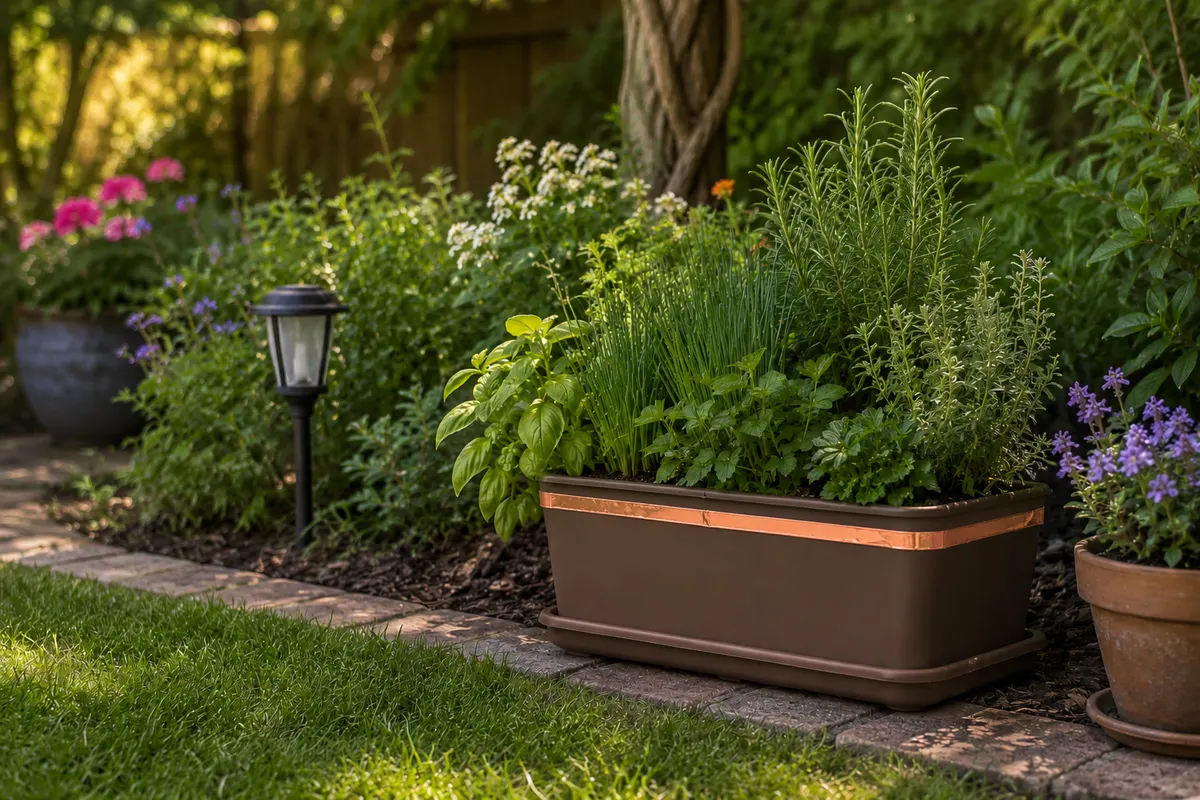
In short: clean and dry the surface, wrap an unbroken band around it, overlap the ends, and double up the band in wet, slug-heavy conditions.
How is copper tape used in stained glass?
In stained glass, copper tape is the heart of the copper-foil (Tiffany) method. You wrap a strip around the ground edge of each piece of glass, fold and burnish it flat against both faces, then solder over the foil to bond the pieces into a panel. Choose a tape width that leaves a small, even margin on each face for the solder to grip.
In short: copper-foil tape wraps and seals glass edges so they can be soldered together in the Tiffany stained-glass technique.
Can copper tape be used for EMI and RF shielding?
Copper tape is a common, low-cost way to shield against electromagnetic and radio- frequency interference. Makers line guitar control cavities, instrument enclosures and small project boxes with it to quieten hum and noise. Our copper tape has conductive adhesive, so overlapping seams stay electrically continuous — the whole lining behaves as a single, connected shield without extra solder bridges.
In short: copper tape lines cavities and enclosures to cut EMI/RF interference, and its conductive adhesive keeps overlapping seams connected across the whole shield.
What else is copper tape used for?
Beyond the garden and the workshop, copper tape is handy for electronics and repairs: low-resistance conductive paths and grounding, paper-circuit and STEM projects, model- making, and tidy cable or antenna repairs. Its thin profile and strong adhesive let it sit flat on almost any clean surface.
In short: copper tape also suits electronics, grounding, STEM and craft projects, and small repairs.
Which width of copper tape should you choose?
Match the width to the job. Narrow tape is neat for stained glass and fine electronics; wider tape is better for slug barriers and shielding larger surfaces. Browse the full range below and pick the width your project needs.
- Copper Tape - 5mm x 25m — £4.09
- Copper Tape - 10mm x 25m — £5.19
- Copper Tape - 20mm x 25m — £6.09
- Copper Tape - 24mm x 12m — £6.09
- Copper Tape - 50mm x 15m — £10.49
In short: choose narrow tape for fine work and wide tape for slug barriers and shielding — see the full range for all five widths.
Frequently asked questions
- Does copper tape really stop slugs and snails?
- Yes — as a complete, gap-free ring on a clean surface. When a slug or snail's moist body touches copper it meets a mild electric sensation it dislikes, so it turns back. It is a chemical-free deterrent rather than a pesticide, so the barrier must be unbroken and free of leaves or soil that let pests bridge it.
- Which width of copper tape is best for a slug barrier?
- Wider tape works better, because slugs and snails struggle to stretch across a broad band. For pots and raised beds, 30–50 mm is the most reliable choice. Narrow 5–10 mm tape still helps on small containers, but determined slugs can sometimes bridge a thin strip.
- Does copper tape stop working once it tarnishes?
- A bright copper surface gives the strongest reaction, and tape does dull over time outdoors. It keeps deterring pests as it tarnishes, just a little less strongly. A quick wipe with a cloth or a little vinegar restores the shine and the effect.
- Can I use copper tape for stained glass?
- Yes. Copper foil tape is the core of the Tiffany method: you wrap it around each glass edge, burnish it flat, then solder over it to join the pieces. Match the tape width to your glass thickness so a small, even margin folds onto each face.
- Is copper tape good for EMI or RF shielding?
- Yes — copper tape is widely used to line guitar control cavities, enclosures and equipment to cut electromagnetic interference. Our copper tape has conductive adhesive, so overlapping seams stay electrically continuous and the whole lining works as one shield.